

The Sun Got Them Here. Hydrogen Could Take Them Further.
By: Bruce Crossey; Image credit: Sasol Solar Challenge/Andrew Stevenson
It started in the cold.
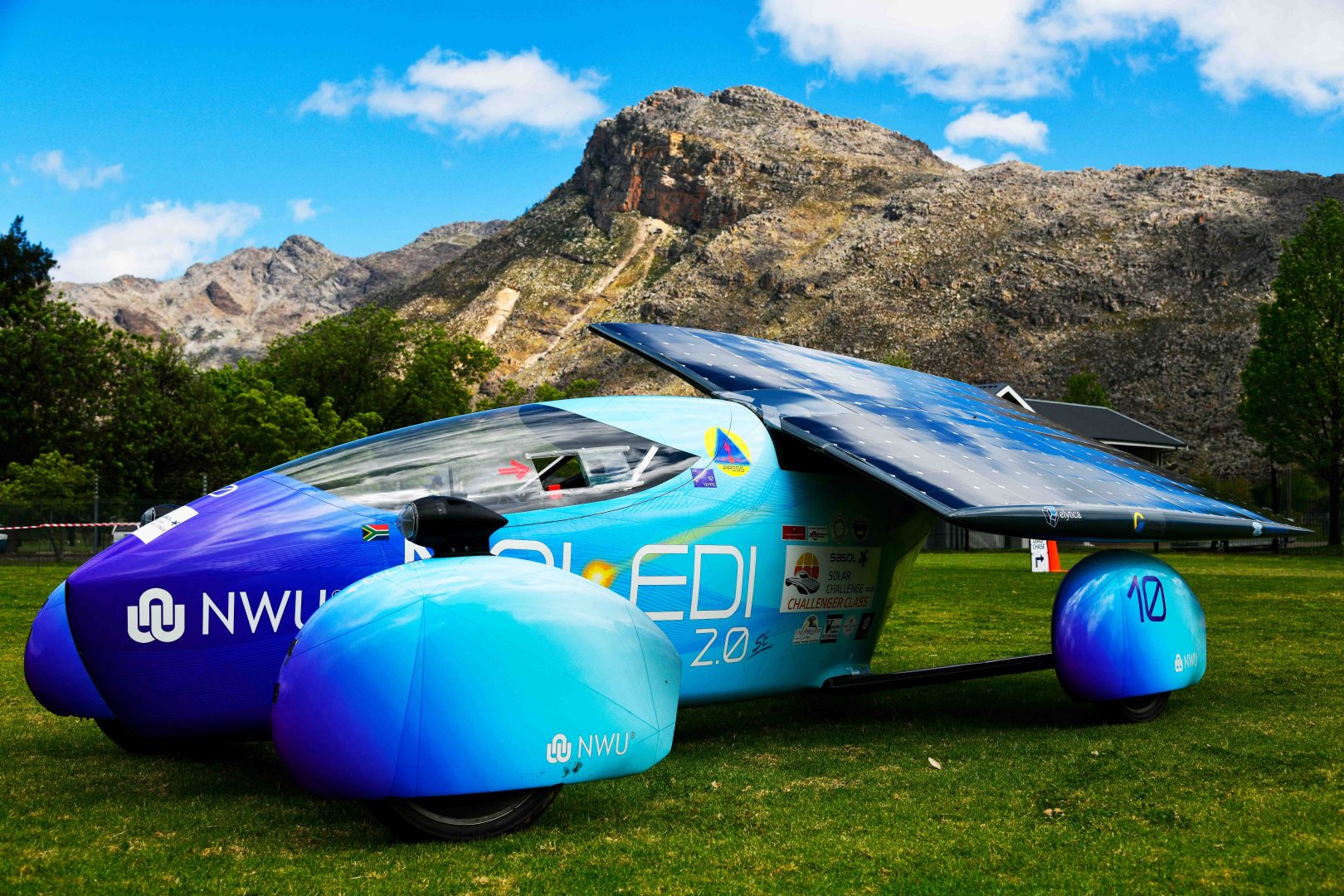
At Red Star Raceway in Delmas, the wind bit and the rain came and went. A field of hand-built solar cars sat under grey skies while officials went over every chassis, every battery enclosure and every braking system. The irony wasn’t lost on anyone: a field of teams about to cross South Africa on sunlight alone, and the sun was nowhere to be found.
Eight days and more than 2 300 km later, they rolled into Franschhoek. In between, they’d been tested by blind stages, scorching heat, flooded roads and mountain mist. This is the story of the 2026 Sasol Solar Challenge.
Beyond Engineering
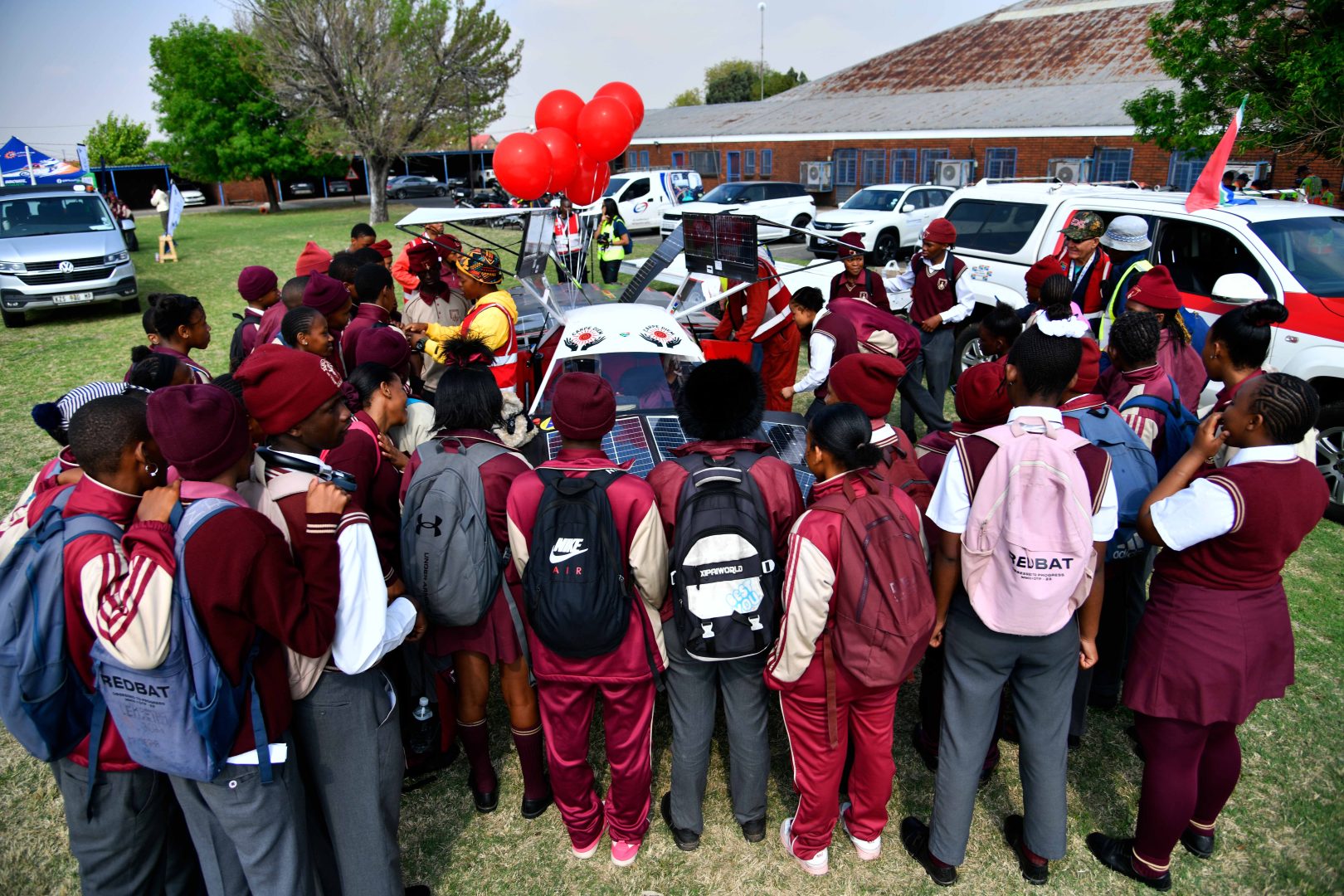
Before pulling out from Sasolburg’s Boiketlong Hall, the cars drew a different type of crowd. More than 2 200 learners filed past them as part of the Sasol Solar Challenge Schools Programme. Many students meeting a solar car team with their hand-built vehicle for the first time. They asked questions, engaged with STEM learning stations and saw what university teams, homegrown innovators and high school students can build when they dare to push innovation beyond boundaries.
Lights Out, Sun Up
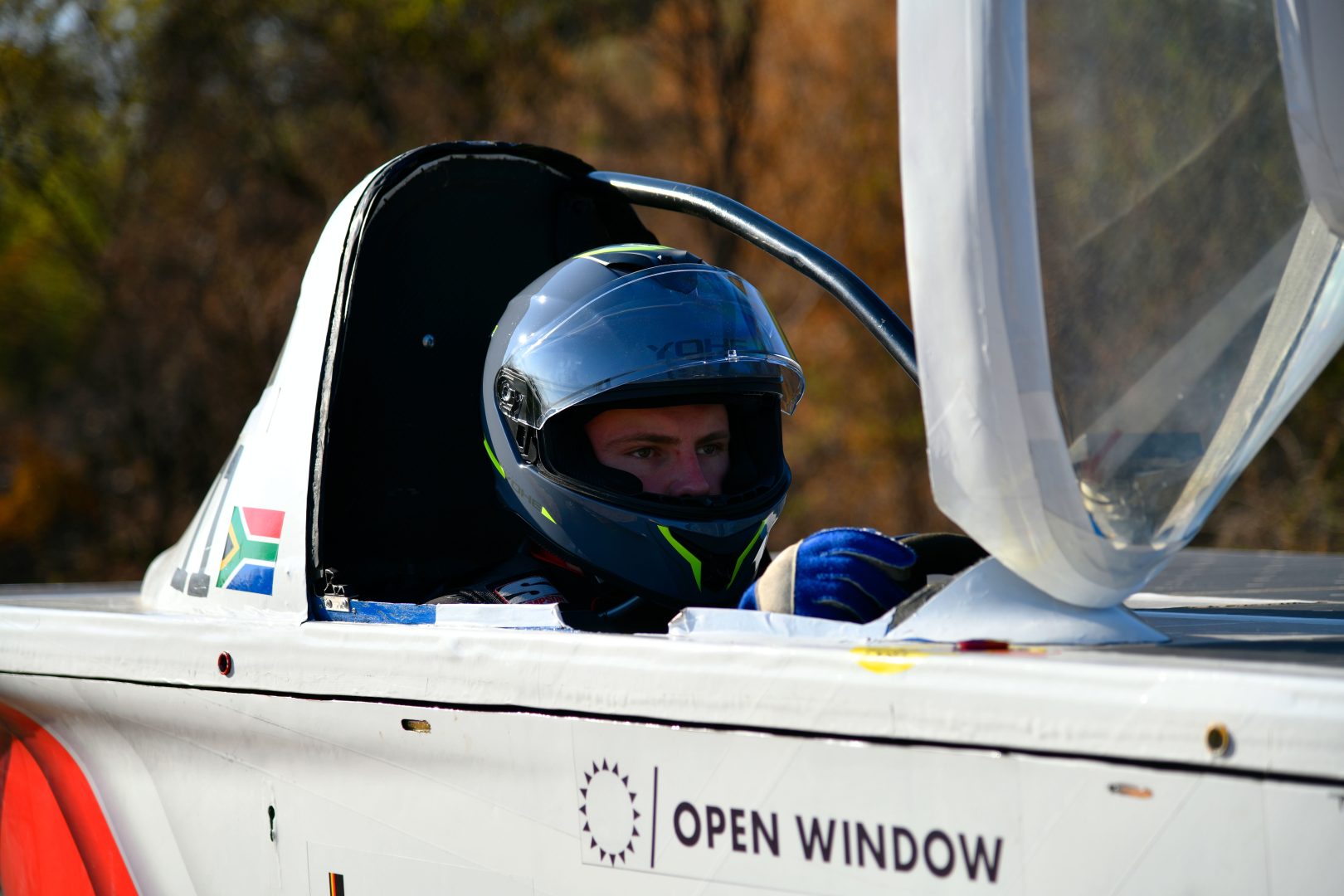
One day later, on 10 September, the cars took to the road. Crowds, officials and dignitaries gathered at the start line, and Tshwane University of Technology’s Sunchaser 4 led the Challenger class off the line. By the end of Day 1, TUT had set the tone, covering 275.2 km, with India’s AgniRath hot on its heels at 214.6 km.
Then the Challenge really kicked in to gear.
To see why, it helps to know how a day on the road works. The cars aren’t racing to the finish line daily. Instead, they are competing to accumulate the most distance covered. Each day, teams drive a set route, and partway along it sits a compulsory checkpoint (called a control stop). There, teams can head out on extra distance loops to bank more kilometres before carrying on to the finish line.
What counts at the end of the day is how much distance a team covers. Every decision comes down to energy: how much charge is in the battery, how much sun is forecast, and how hard can you push the car along the remaining route?
On Day 2, teams faced the half-blind stage. They knew the route to the control stop, but were only given the route for their distance loops the night before. On Day 3, it went a step further. This was the full-blind stage, where teams learned the complete route for the next day only as night fell. Imagine being handed tomorrow’s route at dusk, then having to decide how to spend your energy, which loops to attempt and how hard to push, all with a car that can’t be traditionally refuelled! Strategy sessions stretched into the small hours of the morning as teams fine-tuned their cars and snatched what rest they could.
The blind stage route ran from Vryburg, through a control stop at Jan Kempsdorp, to the finish line in Kimberley. Teams were up early to charge their cars in the first light, then made the most of the sunshine on the road to the control stop. The loop there was a relatively short 18 km, so the whole field pushed hard. The intense African sun was a gift to the cars, but a punishing one for the people around them. Crews worked and drove through the heat. Tshwane University of Technology extended its lead, and Sol Invictus Dynamics, Genuine JV and AgniRath all completed loops of their own.
But the story of the day belonged to MP Solar Flair.
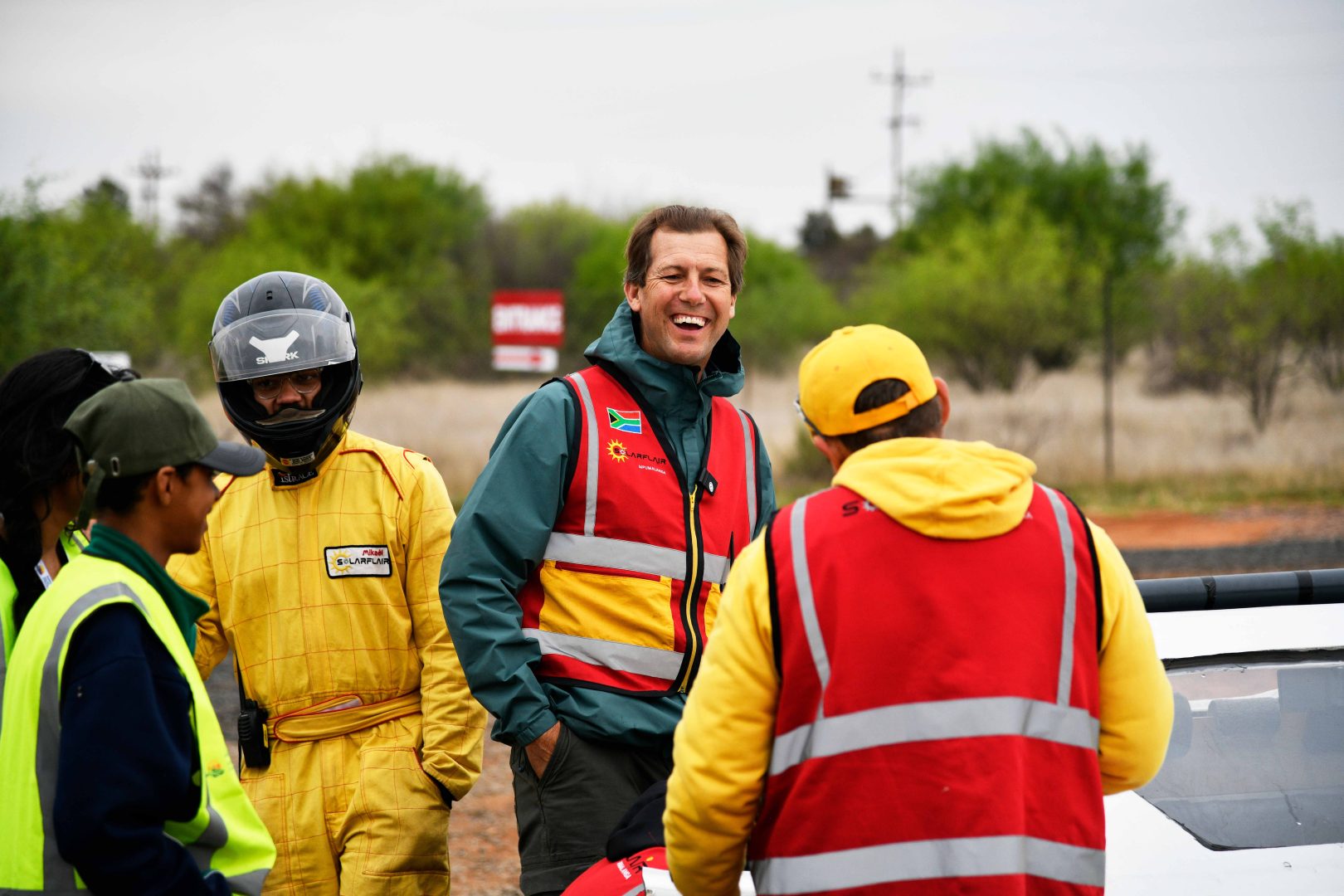
These cars are experimental, built from scratch by the teams that drive them, and things often go wrong under the harsh conditions on the road. When a car can’t carry on, or the road becomes unsafe, it must be loaded onto a trailer and carried ahead to the next scheduled stop. So finishing a day’s route under your own power is an exceptional acheivement in and of itself. On Day 3, MP Solar Flair, a privateer team of local innovators, did exactly that. The team covered the whole day’s route, from the start line to the control stop, and from the control stop to the finish, without needing trailer support. In three seasons of competing, it was the first time they had done it.
The Spirit of Ubuntu Shines Through
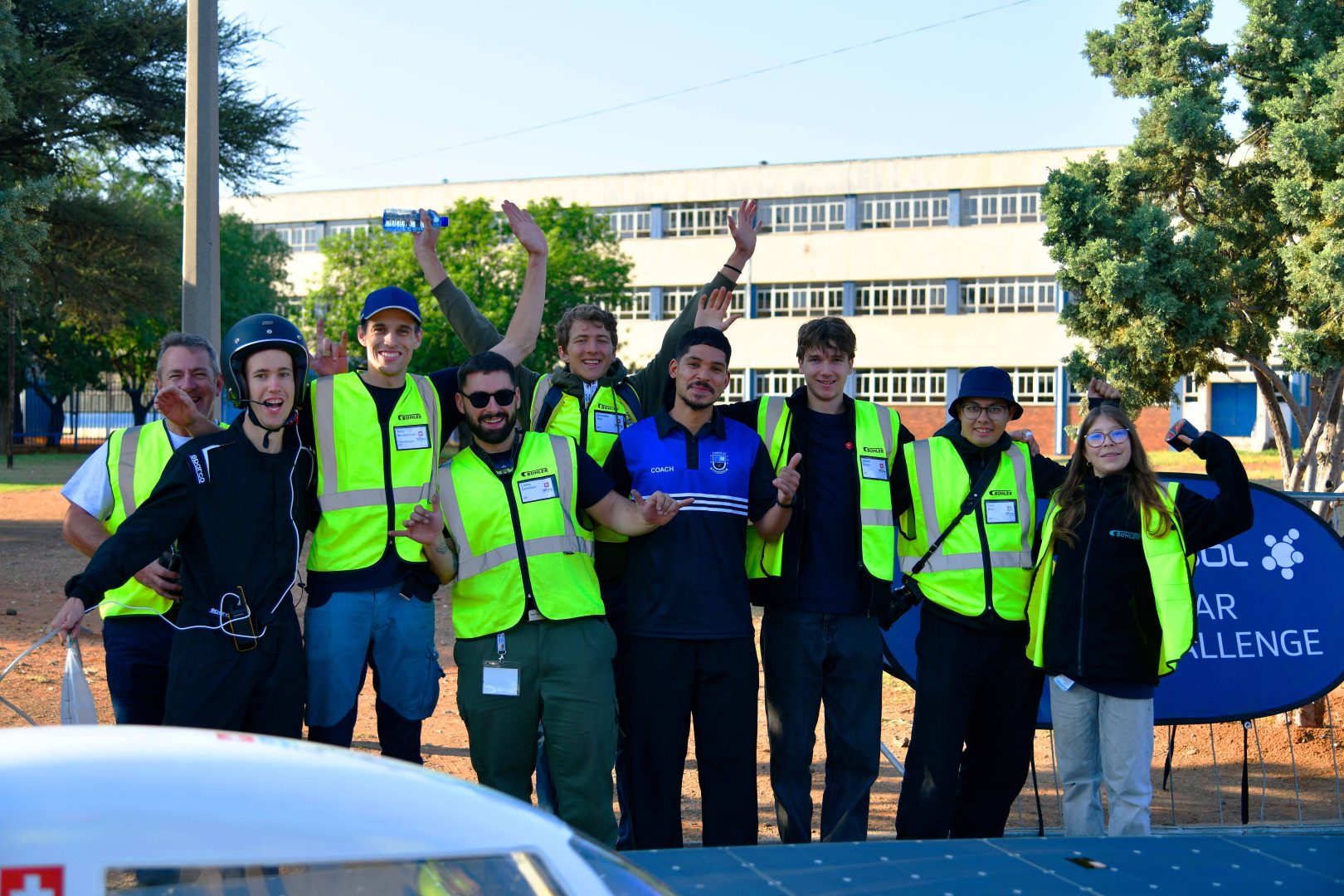
On the same day that MP Solar Flair were celebrating their milestone, Swiss team Solar Energy Racers were having a very different evening. Somewhere along the road, their car’s axle took a bad hit. The axle carries the car’s wheels and its weight, so without it the car simply couldn’t go any further. Every car competing in the Sasol Solar Challenge is designed and built from scratch by the team that drives it, and no two vehicles are alike. That means there is no shop in town that is going to stock the broken part you need. Someone would have to make it bespoke, overnight, in a town the team had only just arrived in.
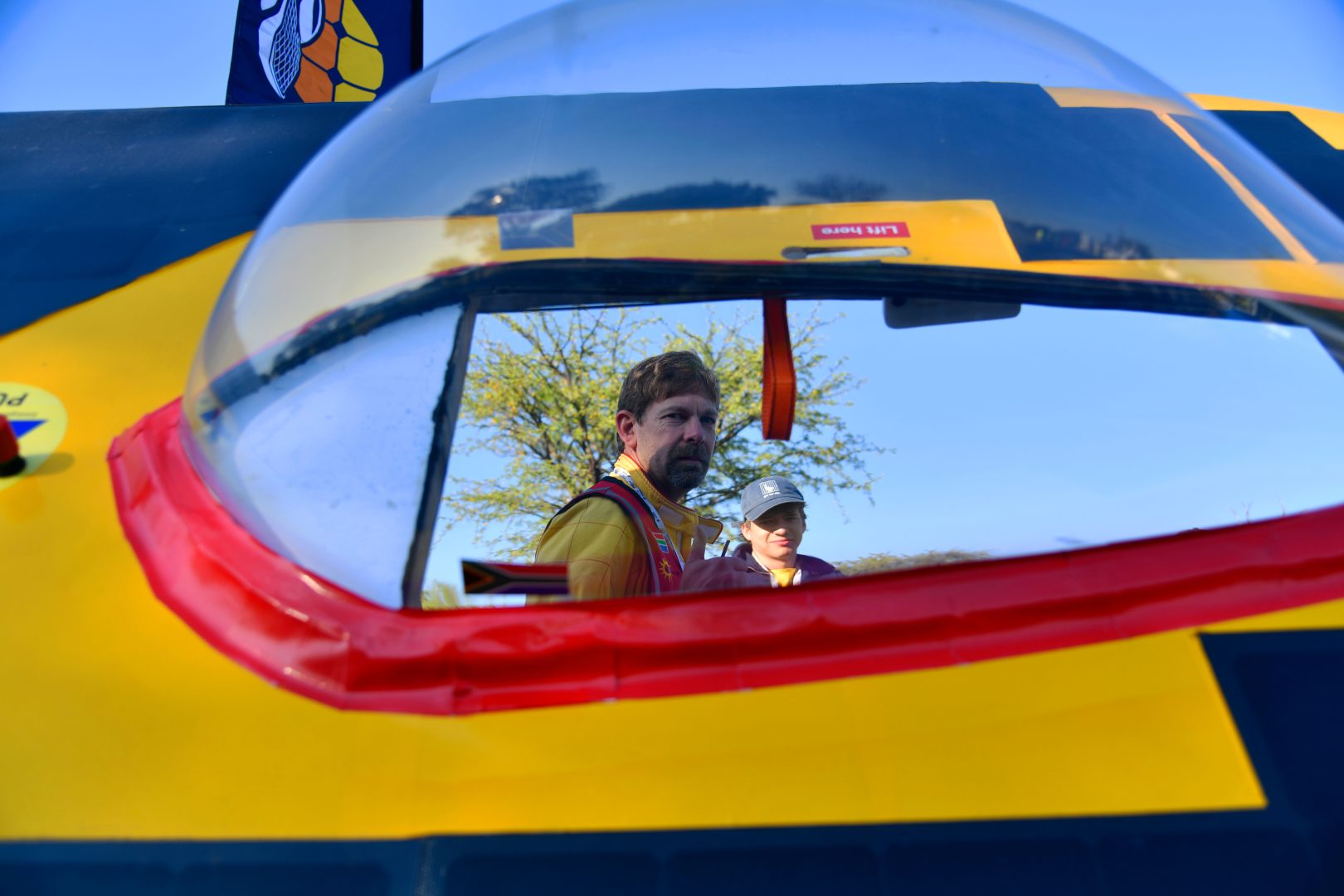
Enter Diego Beckmann. A qualified millwright, a tradesperson who builds and repairs heavy machinery, and a teacher at Kimberley Technical High School. Diego didn’t just offer advice and send them on their way. He spent the entire night alongside the team, helping them manufacture the replacement part.
When the sun came up, the Swiss team was back at the start line. And they didn’t just get through the day: they covered the most distance of any team in the field, with their highest daily total of the 2026 Sasol Solar Challenge.
That’s Ubuntu, the southern African ideal that we all exist because of (and for) each other, and it’s why the Sasol Solar Challenge comes alive in the towns it visits.
When the Sky Turned
Then came the weather. A solar car lives and dies by the sky, so a heavy system rolling in is about the worst news a team can get. On Day 5, one settled over the road from Olifantshoek to Upington.
Five teams lined up at the Olifantshoek start line under cloudy, rainy skies, determined to get what running they could before conditions closed in. The remaining teams made the call to trailer through to Upington from the outset. A trailer means the car is loaded up and carried ahead instead of driven under its own power. By the end of the morning, that decision appeared to have been a wise one.
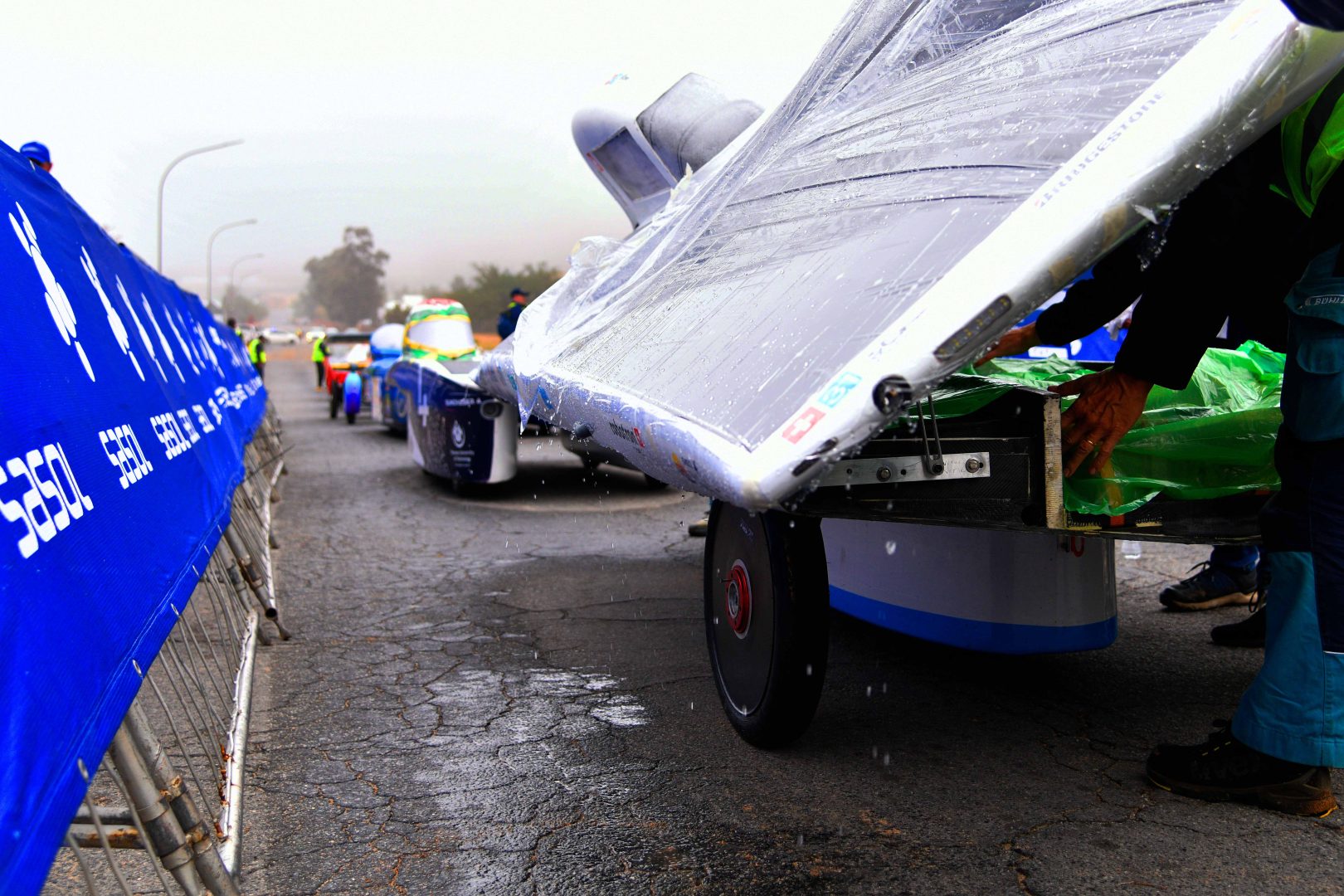
Shortly after the start, conditions deteriorated so quickly that organisers called a force majeure, the term for circumstances beyond anyone’s control. Every team had to pull its car off the road and trailer through to Upington. By the time they arrived, more than 40 mm of rain had fallen and parts of the town were flooded. The teams eventually restarted from the control stop at Upington High School, in mud, under overcast skies and on waterlogged fields.
The organisers also cancelled the Marathon Stage planned for Augrabies, which would have added restrictions on the work teams could do overnight. With strong winds, rain and heavy cloud forecast, they judged that stacking those restrictions on top of an already demanding day wouldn’t serve the spirit of the event. Instead, normal finish procedures applied. Cars were held in a secure area called Parc Fermé for 30 minutes, after which teams could return to their campsites for normal maintenance, with no overnight limits on their work.
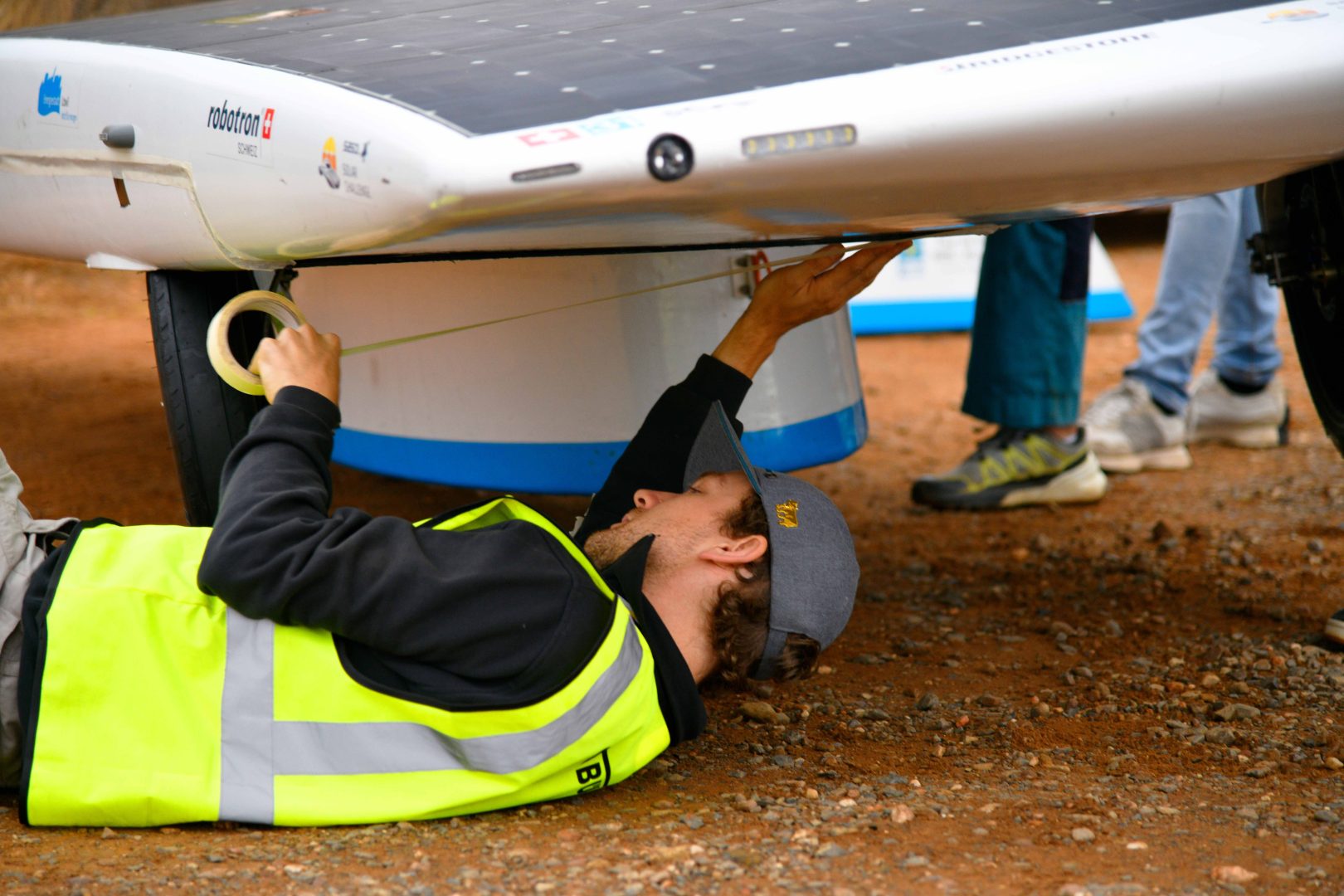
The harsh conditions on the road also claimed CUT Seilatsatsi. Overnight, the team made the difficult decision to withdraw. After many kilometres on the road, an internal motor fault had led to the failure of several key motor components, and destroyed the wheel structure beyond repair. CUT’s was a Cruiser Class car, which has to carry an extra passenger over the whole distance, making the demands even greater. The team withdrew with 340.5 km covered.
Two days later, thick mist and low cloud settled over the Springbok start line. With the sun almost entirely blocked out for the morning, batteries had little chance to top up, and teams had to manage their charge carefully instead of relying on the African sun. The route offered long, straight stretches, but the steady uphills of the mountainous terrain made it tougher still. Some teams, including EVNXT, trailered through to the control stop at Vanrhynsdorp to save their energy for the distance loops waiting there. The forecast was hard on everyone, but Solar Energy Racers still posted the best total distance of the day: 371.5 km.
Trading Secrets
The last morning began in Clanwilliam, among the orange blossoms, with the long shadows of the Cederberg mountains stretched across the start line.
By now, the standings were no secret. After seven days on the road, Tshwane University of Technology led Switzerland’s Solar Energy Racers by just over 500 km, a gap that was almost impossible to close in a single day. But the day was still demanding. The route ran from Clanwilliam to the control stop in Ceres, then on to the final finish line in Franschhoek. The mountains that framed the start made it hard to charge batteries, and the steep climb out toward Ceres was as tough as the views along the way were spectacular.
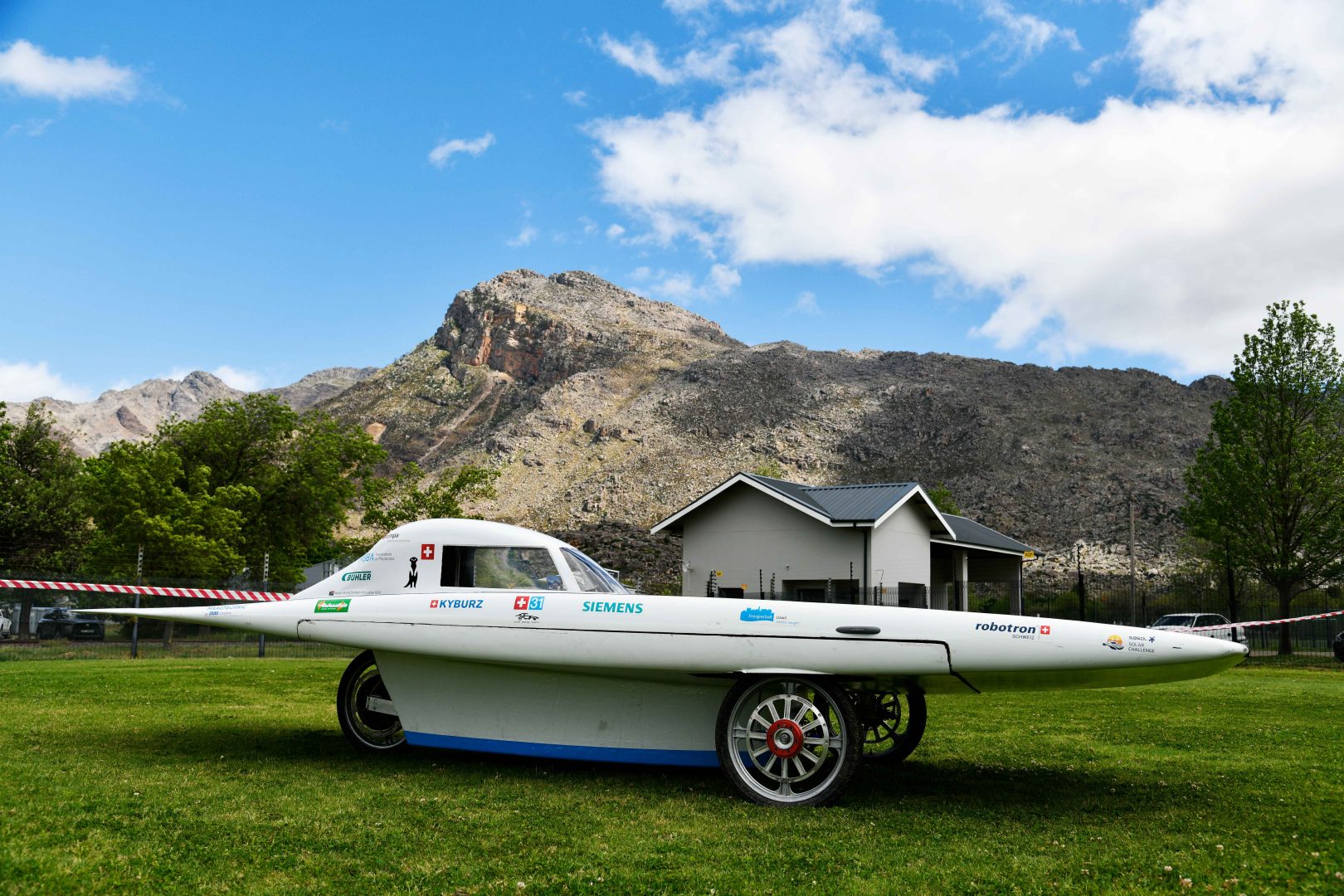
With the 2026 Challenge coming to a close, one of the most endearing aspects of the event came to the fore. Every car in the Challenge is designed and built from scratch by the team that drives it. What sets one car apart from the next is years of work: a battery strategy refined over countless late nights, an aerodynamic tweak that squeezes out a few extra kilometres, the small engineering choices that give a team its edge. For weeks, these were guarded closely. Rivals shared a road, but not their secrets.
With the finish line finally in reach, teams began swapping stories. Ideas that had been kept to themselves all event long were shared freely between rivals. It’s one of the best things about the Challenge: after eight days of competing against each other, the teams chose to build bridges that will long outlast the event itself.
A First for Africa
Amid that spirit, one team’s achievement stood alone.
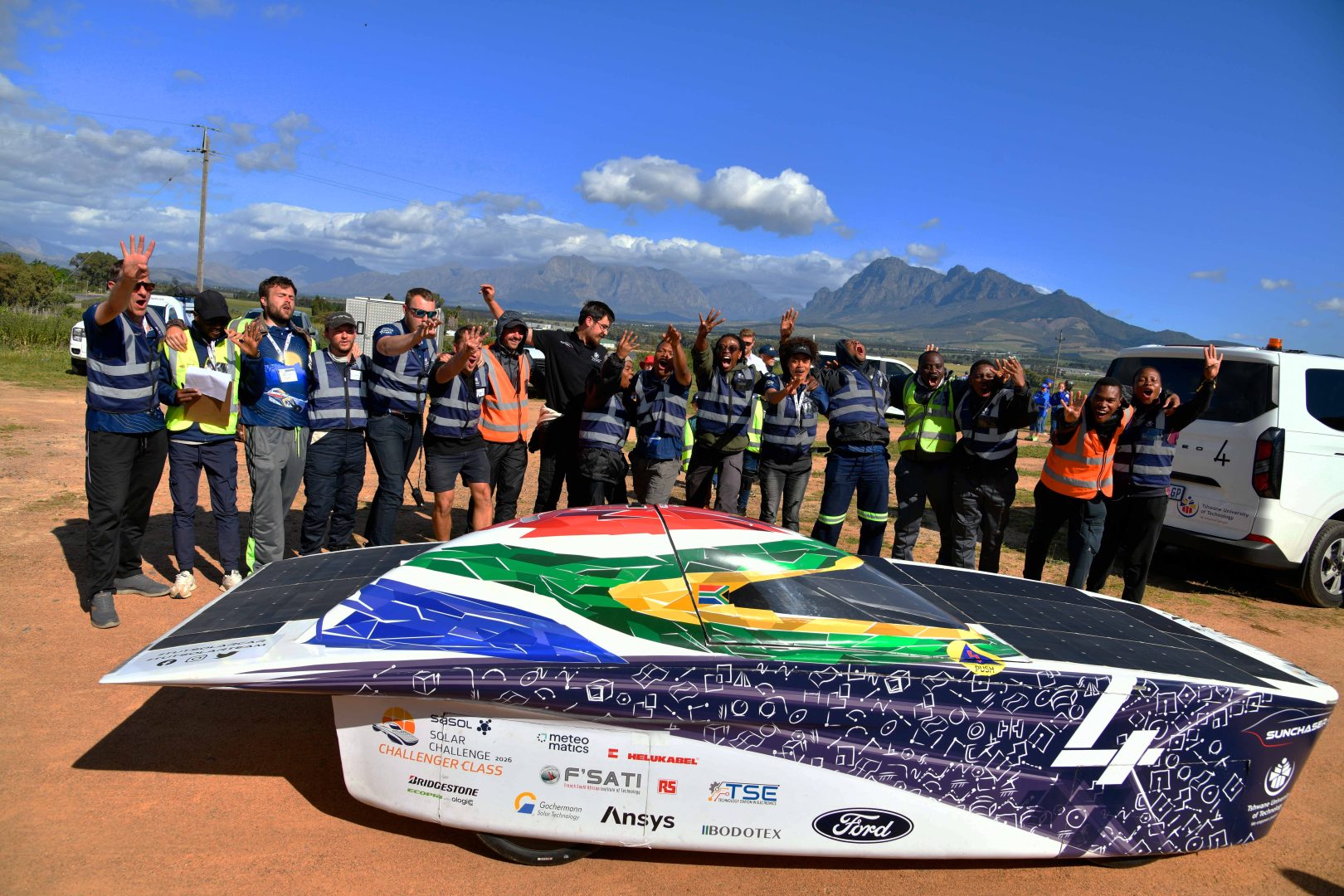
Every competitor was working to reach the final control stop under their own power, but Tshwane University of Technology’s Sunchaser 4 was the only car to arrive without a trailer. It carried that momentum all the way to Franschhoek, and when the leaderboards were finalized, TUT topped both the daily and overall standings with 2 369.2 km.
That made them the first South African team to win the event, and the first local team in Sasol Solar Challenge history to complete the newly designed full route unassisted. It was a landmark moment for the team, for the continent, and for everyone working to push renewable energy technology forward in Africa.
Switzerland’s Solar Energy Racers took second place with 1 518.3 km, more than 850 km behind, no small feat given everything the team overcame before and during the event. Third went to AgniRath from India, with 1 191.6 km.
The Road to 2028
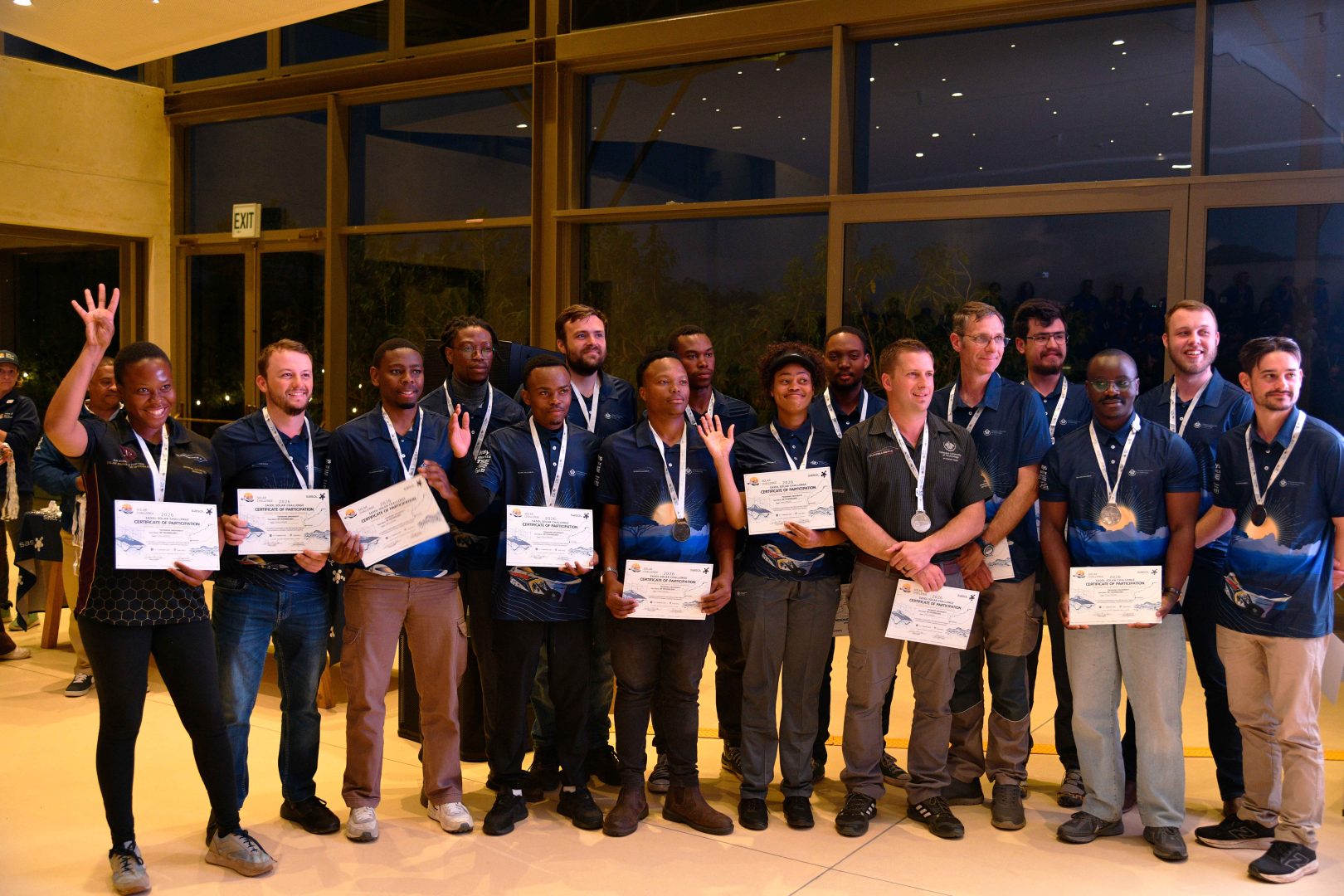
At the awards ceremony, Event Director Robert Walker thanked the teams. “Eight days ago, I asked you to chase the sun together. You did that, and you all did it brilliantly.”
Then he turned to the future.
The Challenge began with a simple question: could a university team build a car capable of crossing South Africa using nothing but the sun? That question is answered. The solar cells, batteries and electric drivetrains in these cars have matured enormously, and that changes what the Challenge needs to ask next. As Walker put it: “Increasingly, what limits innovation out there isn’t what our teams are capable of building. It’s the boundaries we set around what they’re allowed to build with.”
So organisers are exploring bringing green hydrogen into the Challenge from 2028, alongside solar and batteries. Green hydrogen is a fuel produced using renewable energy. Solar isn’t going anywhere. As Walker said, “It’s the heart of this event, and it always will be.” The idea is not to replace what the teams have built, but to open up a much bigger engineering problem. How much of a car’s energy should come from the sun? How much from a battery? How much from hydrogen? And how do those systems work together?
Walker is clear about what he’s asking: “That’s not a small ask. It’s a real one. And I believe this community is exactly the one to answer it.”
In practice, the new rules could change a lot for what the Challenge looks like in 2028. The Challenge runs in classes, including Challenger and Cruiser vehicles (Cruiser cars must also carry a passenger) and an Innovation class. For Challenger and Cruiser vehicles, the changes could mean a significantly smaller battery, a smaller solar array and a limited allocation of hydrogen to manage over several days, with refuelling only at controlled points. The Innovation class could go further still, exploring technologies such as hydrogen combustion within clearly defined safety and energy limits.
The detailed technical framework is yet to be written. It will be developed with universities, engineers, hydrogen specialists, energy companies and the wider technical community. The coming months will focus on the technical regulations, safety framework, energy allocations, refuelling models and vehicle designs, giving teams time to design, build, test and refine entirely new approaches before 2028.
Twenty years ago, the Challenge asked whether a vehicle could cross South Africa using the sun. The next question is bigger: what is the most efficient way to move across South Africa when engineers have access to more than one clean energy source?
The road to 2028 starts here.